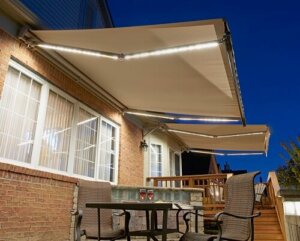

If you live along the Front Range or in the Colorado’s high country, you’re probably intimately familiar with what we call the “Patio Dance.” It starts with a beautiful, calm morning. You set up your outdoor space for a relaxing afternoon, only for a sudden microburst or a rogue Chinook wind to send your umbrella flying and your seat cushions into the neighbor’s yard.
In Colorado, wind isn’t just a weather report; it’s a structural challenge. For homeowners looking to truly reclaim their outdoor living space, traditional manual shades or cable-guided systems can often fall short. They flap, they billow, and eventually, the hardware fails under the stress of another 40mph gust. This is where the Zipper Shade (often called a side-retention or zip-track system) changes the game.
The Physics of the Front Range: Why Standard Shades Fail
To understand the solution, we first have to understand the problem. Colorado’s geography creates unique wind patterns. As air travels over the Rocky Mountains and “drops” into the plains, it compresses and accelerates. According to the Colorado State Planning for Hazards Guide, these “Bora” winds can reach speeds of over 100 mph after cold fronts pass through the state.
The “Sail” Effect
A standard outdoor shade acts like a sail. When wind hits the fabric, the pressure has nowhere to go. In a traditional “drop” shade, the wind gets behind the material and pulls it outward, creating massive mechanical stress on the mounting brackets. In a cable-guided system, while the fabric is “contained,” the wind can still push the center of the shade out like a parachute, leading to the “clacking” sound against the house and eventual fabric stretching.
What Exactly is a Zipper Shade?
The term “Zipper Shade” refers to a specific side-retention technology. Unlike a standard shade that has gaps on the sides, a zipper shade is physically locked into a track for its entire vertical length.
The Mechanics of the “Zip”
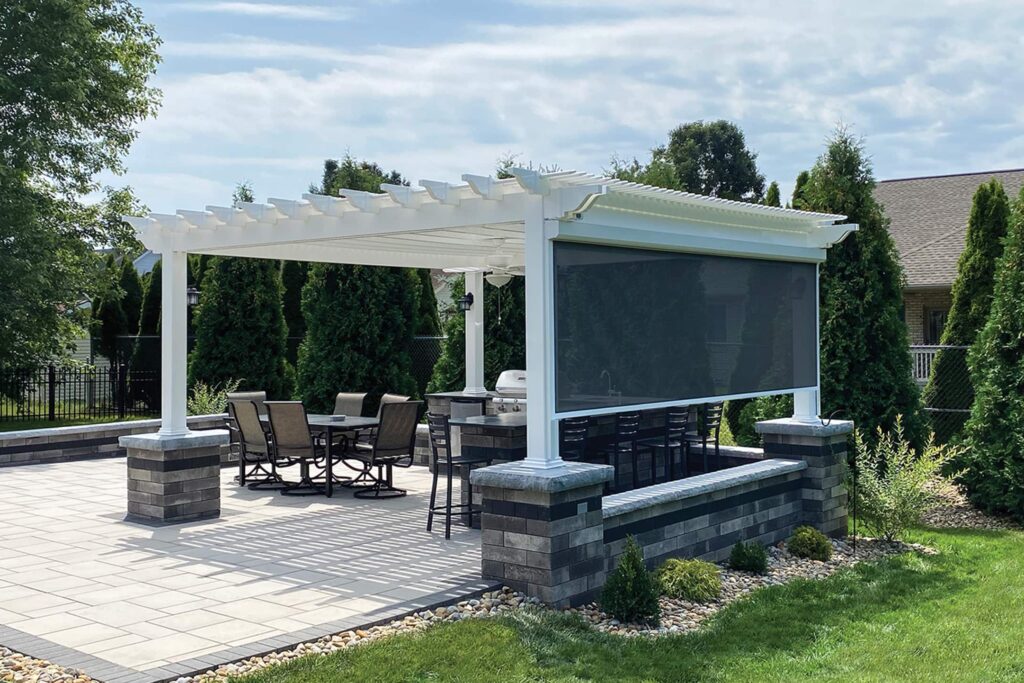
Imagine a heavy-duty zipper. One half is welded to the edge of the shade fabric, and the other half is tucked inside a specialized aluminum side channel. As described by industry experts at North Solar Screen, this creates a continuous, perimeter seal. Because the fabric is locked into the track from top to bottom, the wind cannot get behind it. Instead of the fabric acting like a loose sail, it acts like a drum skin—tight, resilient, and structurally sound.
Technical Specs: High-Wind Ratings and Automation
While a standard patio umbrella might fail at 15 mph, professionally installed zipper shade systems are engineered for much higher thresholds.
Real-World Wind Ratings
Most premium residential zipper shades are rated to withstand winds between 35 mph and 50 mph while fully deployed. However, some high-performance systems have survived extreme testing. For instance, Draper’s FlexShade ZIP has been tested at Florida International University’s “Wall of Wind,” surviving speeds of up to 150 mph in a controlled laboratory environment. While we don’t recommend leaving any shade down in a hurricane, this illustrates the massive leap in durability over traditional products.
The “Smart” Insurance Policy: Anemometers
For a “set it and forget it” lifestyle, motorization is essential. But the real magic happens with wind sensors (anemometers). These sensors measure real-time wind speed and send a signal to the motor to automatically retract the shade if a pre-set threshold is exceeded. This is a critical feature for Colorado, where sudden afternoon thunderstorms can appear without warning while you are away from home.
Beyond Wind: The “Outdoor Room” Transformation
While wind resistance is the engine of the zipper shade, the lifestyle benefits are what make it a “transformation.”
Thermal Regulation and SHGC
In the summer, the Colorado sun is brutal due to our high altitude. Solar Heat Gain Coefficient (SHGC) measures how much solar radiation passes through a material. According to Energy.gov, exterior shading is significantly more effective than interior blinds because it blocks heat before it enters the home. A high-quality solar shade can reduce solar heat gain by up to 85-95%, keeping your patio and your home’s interior up to 20°F cooler.
The “Bug-Free” Seal
Because zipper shades run on a track, they create a bug-tight barrier. It provides the airflow of a screened-in porch with the sleek, retractable look of a modern patio. This seal is also effective at reducing the amount of dust and debris that blows onto your patio during those dry Colorado spring days.
Installation: The Expert Difference
Because zipper shades rely on a precise mechanical track, the installation is much more technical than a standard awning.
Squaring the Opening
Patios are rarely perfectly “square.” If a zipper track is even slightly out of alignment, the “zip” will bind. Experts use a two-part track system where an “inner track” is adjustable. This allows the installer to “shim” the track so it is perfectly plumb, ensuring smooth operation. As noted in Engineering Express’s guide to canopy design, proper anchoring into the structural headers of the home—not just the siding—is vital for handling the uplift and lateral forces of the wind.
Reclaiming the Patio
The goal of any patio project in Colorado is to turn a “sometimes” space into an “always” space. By utilizing the technical superiority of a zipper shade system, you aren’t just buying a screen; you are installing a wind-rated, heat-blocking, insect-proof barrier. Whether it’s a 30-mph gust or a 100-degree July afternoon, the “Zipper Solution” ensures that you are the one in control of your outdoor lifestyle—not the Colorado weather.
Ready to transform your patio? Schedule a free estimate with our Denver-based experts today.