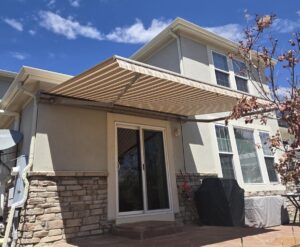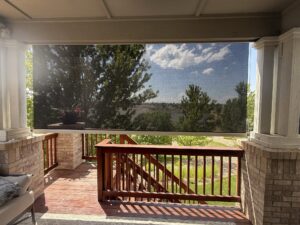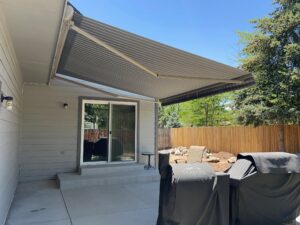

Investing in a high-quality retractable awning is about managing outdoor comfort and enhancing your home’s architectural appeal. The color of your awning fabric directly impacts how your outdoor space functions, influencing heat absorption, glare, and light transmittance.
When selecting from our Sunbrella® fabric collection, the right choice requires balancing architectural compatibility with the physics of light and heat. Here is a practical look at how to select the right fabric color for your home.
Heat, Light, and Glare Considerations
The fabric color you choose dictates exactly how much solar radiation is absorbed, reflected, or transmitted onto your patio.
1. Heat Absorption vs. Heat Transfer
- Dark Fabrics (Charcoal, Navy, Black): These shades excel at absorbing solar radiation, keeping the heat from passing through the fabric. Because a retractable awning is open on the sides, breezes naturally dissipate this trapped heat upward and away, creating a cooler pocket of shade underneath. Deeper shades are an excellent option if your primary concern is bold style.
- Light Fabrics (Beige, Cream, White): Light colors and pastels naturally reflect solar energy away from the fabric surface. However, they allow a higher percentage of total solar energy to pass through, which can create a warmer ambient feel directly beneath the awning on high-UV days. If maximizing home energy savings and driving light away from the exterior is your main goal, stick to the lighter side of the spectrum. Learn more about how shading choices impact your utility bills in our guide on saving money with awnings and solar shades.
2. Ambient Light and Glare Control
- For Screen and Reading Comfort: If you plan to use a laptop, phone, or book on your patio, darker colors are ideal. They absorb light, reducing blinding visual glare and creating an environment that is easier on the eyes.
- For Interior Light Transmittance: If your patio sits next to large glass doors or windows, a lighter awning will bounce ambient light back into your home’s interior, preventing your indoor living spaces from feeling dark when the awning is extended.
- Performance Tip: Consider UV longevity when making your choice. Yellow, blue, and green fabrics are incredibly resilient against sun bleaching and hold their color longest. Red awnings tend to fade more quickly than other colors over time.
The Three-Color Rule
To ensure your exterior looks cohesive, coordinate your awning with existing architectural elements. Avoid introducing a random fourth or fifth color to your exterior. Instead, look at your general color preferences, take dominant interior accent choices into account, and match the fabric to your roof color, your trim/shutter color, or use it to cleanly contrast your primary siding color.
The Exterior Cheat Sheet: Matching Fabric to Your House
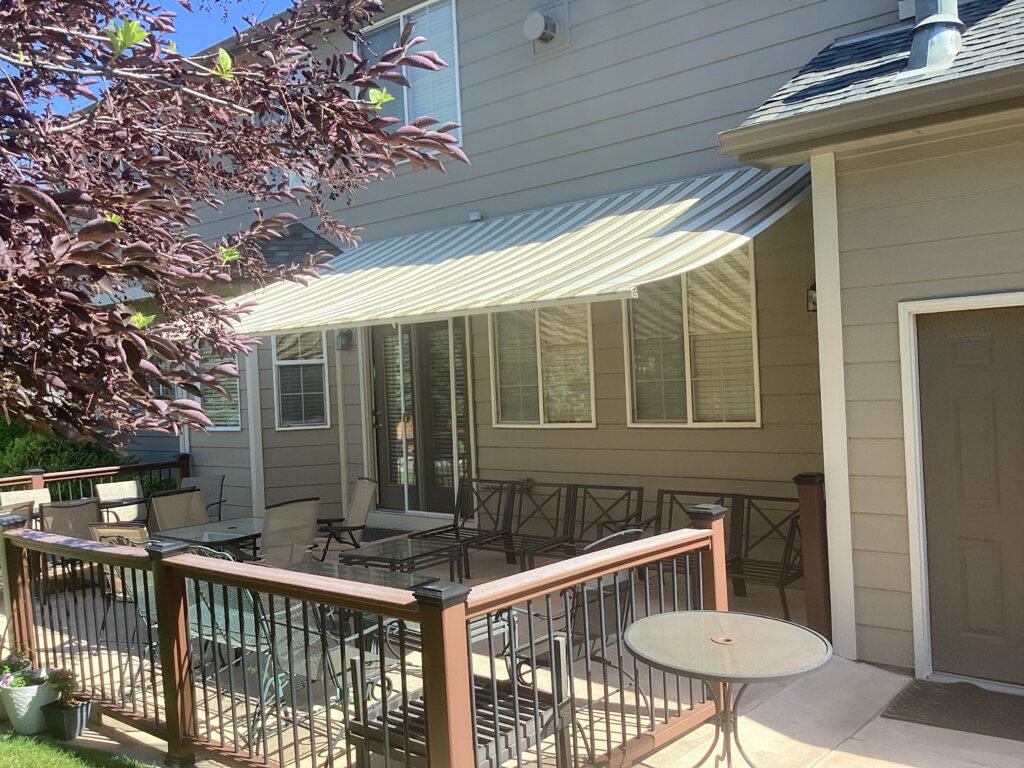
Your awning should elevate your existing exterior materials, keeping in mind that a playful style that works for a beach house might look out of place in the suburbs. Use this quick-reference guide to find your home’s ideal pairing:
- Gray Exteriors
- Suggested Combos: Rich brown awnings look ultra-sophisticated and warm, while a vibrant yellow fabric creates an attractive, eye-catching contrast.
- White Exteriors
- Suggested Combos: A red awning can provide a stunning, energetic pop of color. Alternatively, a clean blue fabric looks stately, classic, and conservative.
- Red Brick Exteriors
- Suggested Combos: Sophisticated neutrals, rich browns, or deep charcoal tones.
- Things to Avoid: Steer entirely clear of green awnings. Pairing green fabric with a red brick exterior can inadvertently give your home an unintended, permanent holiday aesthetic.
- Tan or Beige Exteriors
- Suggested Combos: Choose a deep blue or rich green fabric if you want the color to cleanly pop against the neutral siding.
- Blue Exteriors
- Suggested Combos: Tonal blues, crisp whites, or cool grays.
- Things to Avoid: Skip the bright reds, which can easily look overly aggressive or mismatched against a blue foundation.
- Yellow Exteriors
- Suggested Combos: Earthy, classic green is a highly popular and harmonious color choice for yellow siding.
- Green Exteriors
- Suggested Combos: Deep, warm browns beautifully complement green exteriors for a grounded, organic aesthetic.
- Natural Wood Exteriors
- Suggested Combos: Many colors along with sleek black fabrics work beautifully with natural wood. Make your final decision based on your surrounding landscape and the specific style of the home.
Architectural Blueprint: Styling by House Type
Different architectural styles demand different design languages to ensure your new addition looks intentional.
- Traditional & Colonial Homes: These architectural styles are best complemented by subtle neutral colors, timeless stripes, deep/dull greens, dark blues, or traditional scalloped edges.
- Cottage Style Homes: Play up the historic charm of a cottage by pairing it with classic stripes.
- Modern & Contemporary Homes: Stay away from busy patterns entirely. Modern homes are best complemented by sleek, hard lines and bold, solid colors. You can explore modern frame and style profiles on our core retractable awnings product page.
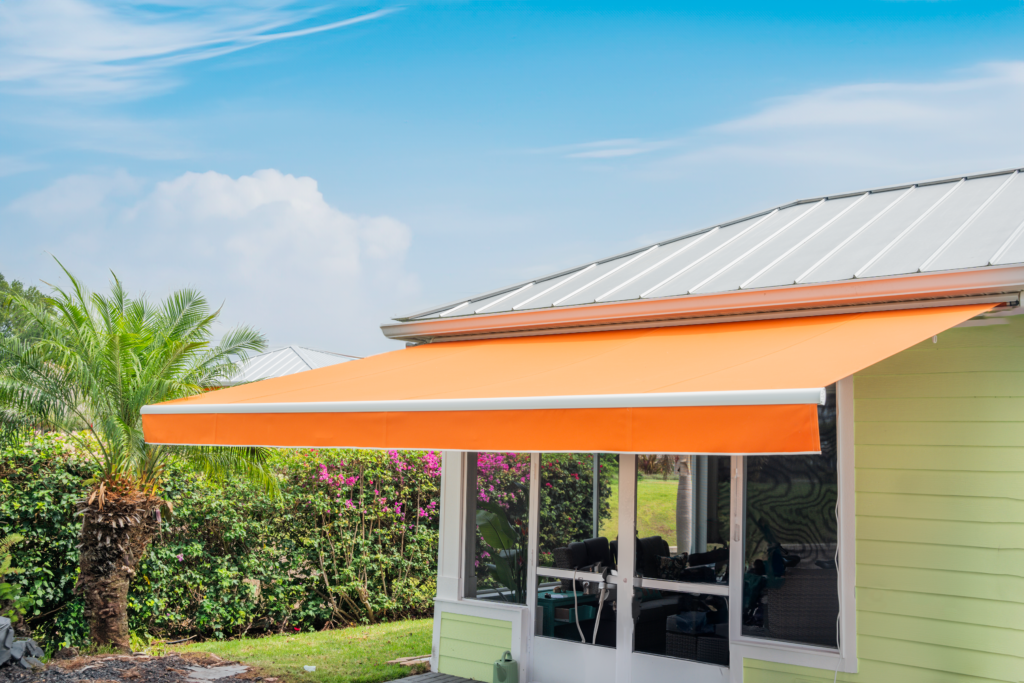
- Beach & Coastal Homes: Take a design risk! Vibrant colors and playful patterns fit right into a coastal or waterfront setting.
- Southwestern & Stucco Homes: Earthy, warm brown-red shades in either solids or block stripes blend seamlessly with stucco finishes.
Finishing Style Considerations
- The Stripe Rule of Thumb: Scale your pattern to the physical size of your layout. A narrow stripe will easily be overwhelmed and lost on a massive awning. As a rule of thumb: the larger the awning, the larger the stripe should be.
- The Disappearing Act: When your awning is retracted, the protective awning cassette housing can match the exact color of your home’s siding or trim to make the entire system virtually invisible against the house.
- Low-Angle Protection: Particularly if your patio or deck is south- or west-facing, an overhead awning might not block the late-afternoon sun. Consider adding a vertical integrated drop shade to your awning for extra shade during the hottest parts of the day.
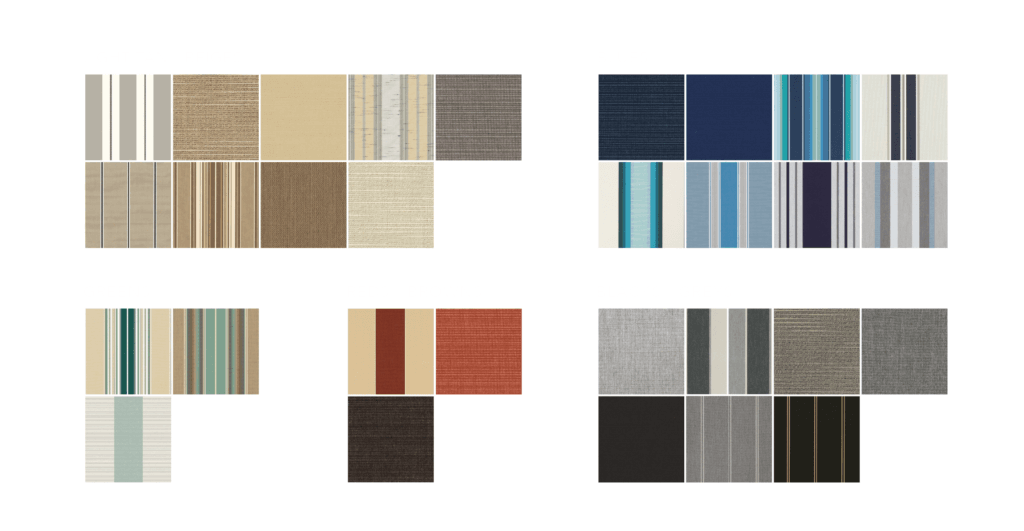
Sunbrella® Fabric Options and Availability
No matter which shade you select, performance matters. We partner exclusively with Sunbrella because their products offer premium durability and design. We offer two distinct pathways based on your project timeline:
- In-Stock Palette (30 Options): We keep 30 of the most common Sunbrella fabric colors fully in-stock. If you want to maximize immediate shade with a standard look, choosing from our curated palette offers our fastest installation turnaround.
- Extended Catalog (300+ Options): If you require a highly specific texture, custom stripe, or niche hue, we provide full access to the extended Sunbrella catalog of over 300 options. This selection requires a longer lead time for custom ordering but guarantees an exact match for your unique exterior vision.
Core Benefits of Sunbrella® Shade Fabrics
Sunbrella shade fabrics are engineered to withstand the elements while maintaining their appearance. Every awning we install features these core performance benefits:
- UV & Fade Resistance: Unlike ordinary fabrics, Sunbrella fabrics are solution-dyed with rich colors that stay brilliant over time no matter the environment.
- Mold & Mildew Resistance: Should exposure to dirt, debris, or other environmental elements cause mold or mildew to occur, the fabric can simply be spot cleaned with a bleach solution.
- Stain & Water Resistance: These fabrics protect you from more than just the sun, offering robust resistance to liquids and outdoor stains.
- Low Maintenance & Easy to Clean: Routine maintenance is simple: just hose down the fabric monthly and deep clean it every two to three years with a simple bleach solution. However, to ensure the structural integrity of the frame, tension arms, and mounting hardware, it’s highly recommended to have professional checks and maintenance on your awning performed regularly to protect your investment long-term.
Review Fabric Swatches In Person
Choosing a color on a screen is a good starting point, but seeing how it interacts with your home’s natural lighting is the best way to make a final decision. Schedule an appointment today to review physical Sunbrella swatches against your siding to find the right balance of style and climate control.