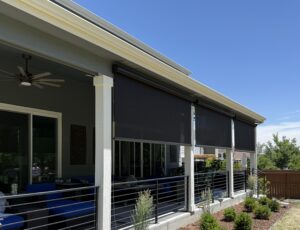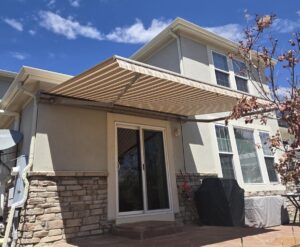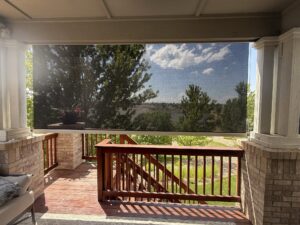

For homeowners along the Front Range with a West-facing backyard, the patio can be the most prized part of the home—until around 5:00 PM. While a westward view often means having a front-row seat to the Rocky Mountains, it also creates a unique geographical challenge: the “blinding hour.” This is the window of time when the sun drops just low enough to bypass your roofline, flooding your outdoor living space with intense heat and horizontal glare.
If you have a West-facing patio, your reaction is often binary. You either retreat indoors to escape the heat, or you install heavy, opaque “blackout” solutions that completely sever your connection to those mountain views. Neither of these is a true solution. The goal of a Front Range patio transformation should be to find a balance—a space that is protected from the sun’s intensity while remaining connected to the landscape that defines Colorado living.
The High-Altitude Challenge of West-Facing Patios
In high-altitude environments like the Front Range, the atmosphere is thinner, meaning UV rays and solar heat gain are significantly more intense than at sea level. When you have a West-facing orientation, you’re catching the sun at its most aggressive thermal peak.
During the late afternoon, a concrete or stone patio can act as a heat sink, absorbing energy and radiating it back up, creating a “kiln effect” that makes sitting outside unbearable. To combat this, you need a solution that manages solar transmission before it hits your home. The challenge for a Colorado awning company is providing this protection without turning your patio into a cave. This is where the technical selection of solar shade fabric and “openness factors” becomes the deciding factor in your patio’s usability.
Understanding Screen Openness Factors for Mountain Views
If you want to maintain your view while blocking the heat, you have to understand “openness.” This is the technical measure of how tightly the solar fabric is woven, and it is the most important specification for a West-facing home.
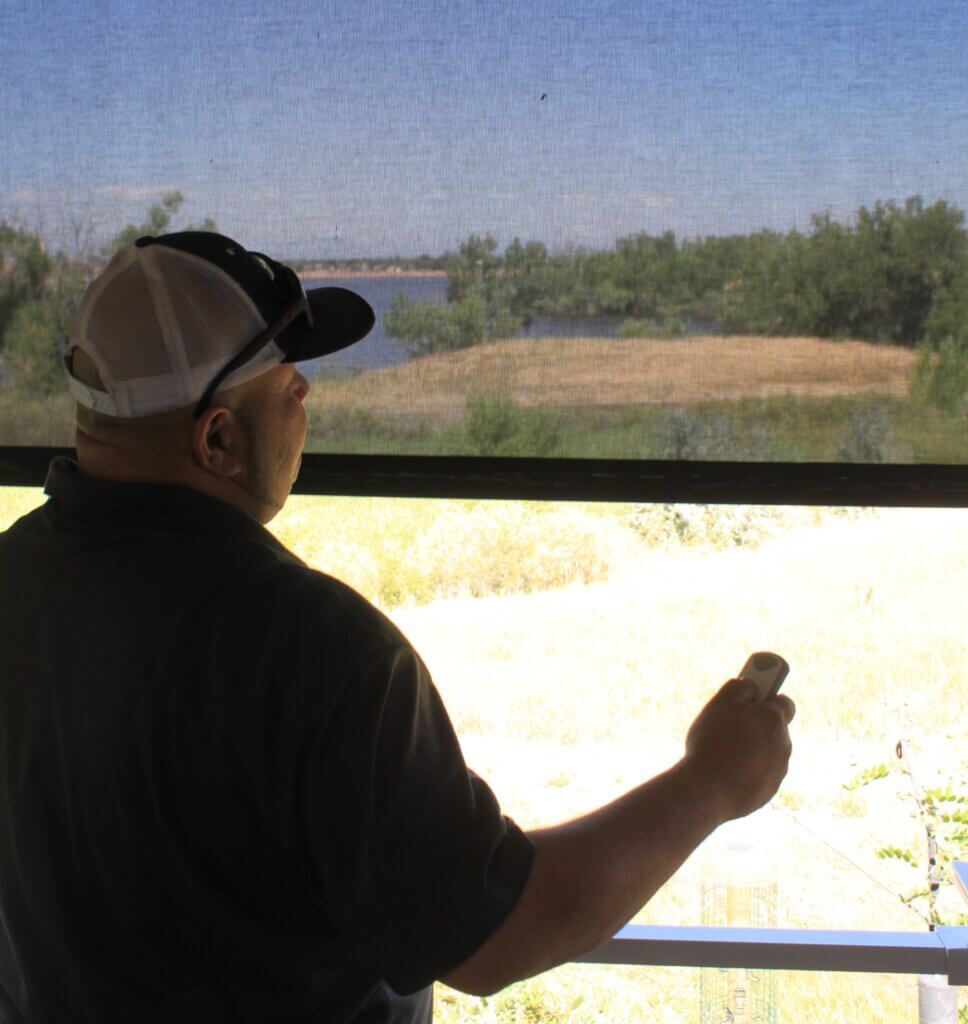
- 1% to 3% Openness: These are tight weaves designed for maximum heat reduction. While they offer the highest levels of cooling, they significantly obscure the view through them.
- 5% Openness: This is the preferred weave for most Front Range solar shades. A 5% openness factor blocks roughly 95% of UV rays and significantly cuts the glare, yet it remains transparent enough to see the silhouette of the mountains and the movement in your backyard.
- 10% or Higher: These weaves offer the best views but allow too much heat and glare to pass through for a true West-facing exposure.
A custom system with a 5% weave — with a balance of protection and visibility — is like putting sunglasses on your patio. You can host a dinner party at 6:30 PM without your guests needing to squint or move their chairs, all while keeping the Rockies in sight. Ultimately, the right openness factor for your patio depends entirely on your preference.
Indoor Temperature Management with Outdoor Shades
A common misconception in Front Range home improvement is that high-quality indoor blinds are enough to keep a house cool. However, once the sun’s energy passes through your window glass, it is already inside your home. The glass traps that heat, forcing your AC to work harder to compensate for the “greenhouse effect” on the west side of your house.
A Front Range patio transformation utilizing retractable solar shades or zipper screens stops that energy before it ever hits the glass. By creating a thermal buffer on the exterior, you can reduce the temperature of the glass itself by as much as 20°F. This approach means your patio stays cool enough for use, and your interior living room stays comfortable without the hum of a constant air conditioner.
Managing Horizontal Glare with Zipper Screens
While overhead awnings are excellent for mid-day sun, they often fail West-facing patios during the blinding hour because the sun is too low. This is where Zipper Screens or side-mounted solar shades become the essential tool for a sunset-facing deck.
Unlike traditional shades that can flap in the wind, zipper screens are locked into a side track. This creates a controlled environment that serves three purposes for the West-facing homeowner:
- Total Glare Control: It blocks the horizontal sun that sneaks in from the side or front of the patio as it nears the horizon.
- Wind Protection: It breaks the gusty “foothills breeze” that often kicks up along the Front Range in the evenings, preventing your outdoor setup from being disrupted.
- Pest Barrier: In the early summer months, a zipped screen keeps mosquitoes and midges out, allowing you to watch the sunset long after the bugs have come out.
Balancing Heat Absorption and Visibility with Solar Shade Color Selection
Just like with retractable awnings, the color of your solar shade impacts your balance of protection and visibility, especially when mountain views are the priority.
Dark Fabrics (Bronze, Charcoal, Black): Counter-intuitively, dark solar fabrics provide the best view through the screen. Because dark colors absorb light rather than reflecting it, your eyes can focus past the mesh to the mountains beyond. They are also the best at reducing glare—perfect for those who want to use a laptop or watch a TV on a West-facing patio.
Light Fabrics (White, Chalk, Grey): These reflect more heat away from the house, which can be a benefit for west-facing walls with massive glass doors. However, they are harder to see through because the light bounces off the mesh, creating a slight hazy effect that obscures the landscape.
For most Colorado shade installation projects with a view, we find that a dark bronze or charcoal 5% mesh offers the perfect balance of heat absorption and crystal-clear visibility.
The Investment in West-Facing Real Estate
If you have a West-facing patio with a view, you have some of the most valuable real estate in the Front Range. However, if that space is unusable from 4:00 PM to 8:00 PM, you’re losing the most valuable hours of the day.
In the Colorado real estate market, outdoor living is a high-demand feature, but a West-facing deck that hasn’t been technically optimized for the “blinding hour” is often seen as a liability during the summer months. Moving the conversation from “we have a deck” to “we have a year-round outdoor suite with a protected view” significantly increases the functional utility and value of your home.
Reclaiming Your Evenings With Solar Screens
The goal of a Colorado awning company isn’t just to install hardware; it’s to return those lost hours to the homeowner. You shouldn’t have to choose between staring at the sun or staring at a wall. By selecting the right openness factor, the right color, and the right combination of awnings and solar shades, you can find that perfect middle ground where the temperature is cool, the glare is gone, and the Colorado sunset is still fully visible.
Don’t let another summer season pass where your West-facing view goes to waste during the best hours of the day. Call Direct Awnings today or click to request your free estimate, and let our experts help you find the right balance of protection and visibility for your Front Range home.