
When shopping for a retractable awning, it is completely natural to look for ways to optimize your budget. A frequent question homeowners ask is whether they can save money by opting for a manual, crank-operated model instead of a motorized system.
While manual awnings do exist on the broader market, the engineering and product lineup we provide at Direct Awnings tell a different story. Here is a closer look at why our retractable awnings are motorized by default, and why attempting to go manual doesn’t actually save you money.
Premium Engineering is Built for Motorization
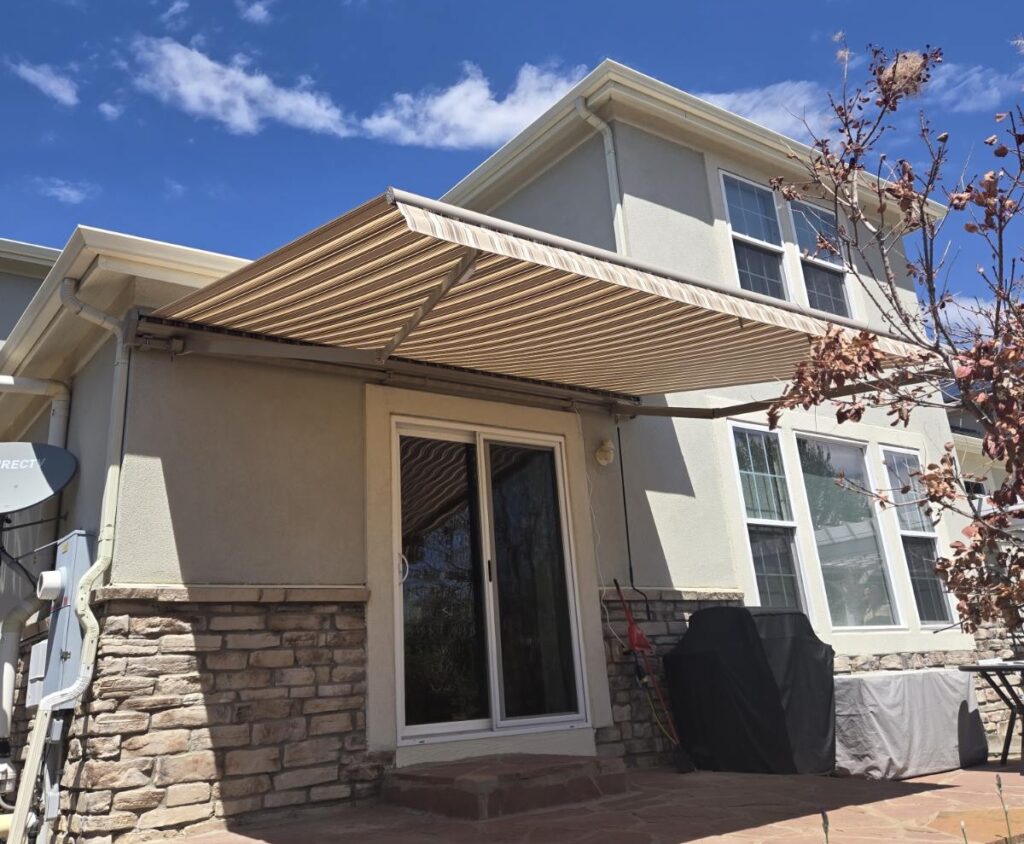
Modern, high-performance lateral arm awnings—such as the premium systems we install across the Front Range—are engineered from the ground up to house tubular motors inside the roller tube.
Engineered Tension: Retractable awnings rely on heavy-duty internal springs inside the lateral arms to keep the fabric taut. A motor provides the exact torque required to safely wind against that constant spring pressure.
Component Integration: Attempting to alter a motorized unit by removing components, bypassing the motor, or rigging a manual override gear does not change the base manufacturing cost of the hardware. The core frame, heavy-gauge aluminum housing, and spring-loaded arms remain identical.
Why “Going Manual” Usually Increases Total Costs
Homeowners often assume that removing electronics or motors will drop the price tag. In practice, forcing a motorized system to operate manually creates the opposite effect:
No Upfront Equipment Savings: Because the units are manufactured as motorized systems, buying the hardware without using the motor doesn’t discount the equipment price.
Increased Labor Expenses: Modifying factory settings, altering internal mechanisms, or installing custom manual crank configurations adds extra labor hours for our installation crew. Rather than saving money, you wind up paying more in custom installation labor for a less convenient end product.
Loss of Smart Automation: Motorized systems allow you to seamlessly pair your awning with protective tech, as explored in our guide on automatic wind sensors. A manual crank leaves your awning vulnerable to sudden Colorado microbursts when you aren’t home to crank it in.
Enjoying Effortless Shade
Modern tubular motors offer smooth, reliable extension and retraction at the push of a button or the click of a remote. By sticking with the factory-engineered motorized design, you ensure your awning operates smoothly, maintains proper fabric tension, and is backed by full manufacturer warranties—avoiding the reliability issues associated with custom manual conversions.
Ready to explore the right motorized shade system for your patio? Connect with our team to discuss your layout or schedule an appointment to review your options.