
When investing in a custom shading system for your home, choosing the right frame mechanism and mounting configuration is only half the equation. The fabric you select is the primary workhorse of your system—it is constantly exposed to punishing high-altitude UV rays, intense heat, and sudden Front Range weather shifts.
Many homeowners assume all outdoor fabrics offer similar performance, but the underlying material engineering tells a very different story. Dip-dyed polyester, vinyl-coated fabrics, and 100% solution-dyed acrylic perform drastically differently over time. As an experienced residential awning company serving the Denver metro area, Direct Awnings exclusively uses Sunbrella® solution-dyed acrylic for our shade systems. Here is a technical breakdown of how shade fabrics are manufactured, why material degradation occurs, and why solution-dyed acrylic is the gold standard for long-term durability.

The Chemistry of Fabric Coloration: Solution-Dyeing vs. Surface-Dyeing
To understand why some shade fabrics fade and weaken after just a few seasons while others maintain vibrant color for over a decade, you have to look at how color is added during the manufacturing process. A helpful way to visualize this distinction is the difference between a radish and a carrot.
The Surface-Dyeing Process (Polyester and Standard Synthetics)
Standard polyester fabrics are woven from clear, colorless synthetic yarns. Once the fabric sheet is fully constructed, it is submerged into a dye bath or surface-printed with color.
- The “Radish” Structure: Think of a radish—it has a vibrant, deep red skin on the outside, but if you bite into it or slice it open, the interior core is completely white. Surface-dyed fabric fibers work the exact same way. The color only sits on the thin outer layer of the yarn, leaving a clear or white center.
- UV Degradation and Fading: When exposed to high-altitude sun along the Front Range, intense ultraviolet radiation slowly scrapes away and breaks down that thin outer shell of dye. As the surface layer erodes, the white interior core becomes exposed. This leads to rapid color bleaching, a dull “chalky” appearance, and structural weakening as the underlying clear fibers break down under heat.
The Solution-Dyeing Process (Sunbrella® Acrylic)
Solution-dyed acrylic takes a completely different chemical approach. Color is introduced at the raw material stage before the yarn even exists. Liquid acrylic polymer is mixed with rich, UV-stabilized pigments while it is still a liquid state. That colored liquid is then extruded into solid fibers and spun into thread.
- The “Carrot” Structure: Think of a carrot—if you snap a carrot in half, slice it, or peel it, it is bright orange all the way through to the very center. Solution-dyed acrylic fibers are identical. The color is not a delicate outer coating; it is an integral part of the fiber’s entire solid structure.
- Molecular Shielding: Because the pigment penetrates the entire cross-section of every single thread, there is no white core to reveal. Even after years of relentless direct sunlight, severe rain, or intense scrubbing, the fabric retains its original depth of color and structural tensile strength.
Material Performance Comparison: Acrylic vs. Vinyl vs. Polyester
| Technical Feature | Solution-Dyed Acrylic (Sunbrella®) | Vinyl-Coated Polyester / Laminated | Standard Dip-Dyed Polyester |
|---|---|---|---|
| Primary Color Method | Liquid polymer pigmentation (“Carrot”) | Surface coating or printed film | Post-weave liquid dye bath (“Radish”) |
| Fade Resistance (UV) | Exceptional (10+ year color fastness) | Moderate (Prone to yellowing/cracking) | Low (Noticeable fading within 1-3 years) |
| Breathability | High (Woven micro-ventilation) | Zero (Traps heat underneath) | Moderate to Low |
| Mildew & Mold Resistance | Excellent (Inherent acrylic properties) | High on surface, but traps underlying moisture | Poor to Moderate |
| Flexibility & Weight | Lightweight, supple drape for easy rolling | Heavy, rigid, prone to crease memory | Medium weight, weakens over time |
Thermal Comfort and Breathability Under Your Patio Cover
Beyond long-term durability, the material you select directly impacts how cool your patio or enclosed patio space feels on a hot July afternoon.
Why Vinyl Traps Heat
Vinyl and vinyl-laminated fabrics are completely non-porous. While they are highly waterproof, they create a thermal trap. Hot air rising from your deck or patio furniture hits the underside of a vinyl awning and has nowhere to go. This turns the space underneath into a heat pocket, radiating warmth downward onto your outdoor seating area.
How Solution-Dyed Acrylic Breathes
Sunbrella® solution-dyed acrylic is woven into a high-density, water-repellent grid that retains micro-ventilation pathways. This allows trapped heat and ambient humidity to escape naturally through the fabric, creating a refreshing shade footprint that can lower the feel of ambient air temperatures by up to 15 degrees underneath.
If you want to maximize energy savings inside your living room as well, explore how exterior shade barriers stop indoor heat gain in our guide on how awnings and solar shades slash home energy costs.
Maintenance, Bleach Cleanability, and Mold Prevention
Because standard outdoor fabrics are surface-dyed, using aggressive cleaning chemicals to remove stubborn bird droppings, tree sap, or dirt streaks can strip away the color altogether.
Because Sunbrella® acrylic has pigment engineered directly into every fiber core, it exhibits incredible chemical resistance:
- Bleach Cleanable: You can safely clean stubborn stains or mildew spots using a simple bleach solution without bleaching out the original fabric color or weakening the weave.
- Inherent Mold Resistance: Synthetic acrylic offers no organic food source for mold or mildew growth. Routine hose-downs are usually all that is needed to keep the fabric looking pristine.
When planning long-term care for your investment, pairing routine homeowner washing with regular professional checks and maintenance on your awning ensures your frame, motors, and tension arms stay as healthy as your fabric.
Complementing Your Overhead Canopy with Vertical Solar Shades
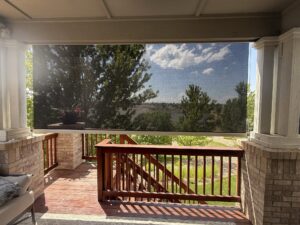
Many Front Range homeowners pair their overhead retractable canopy with vertical side shading to create a comprehensive outdoor living room. Just as solution-dyed acrylic provides optimal overhead coverage, specialized exterior mesh fabrics handle direct, low-angle solar glare without blocking your mountain landscape.
To learn more about finding the right balance between heat reduction, fabric density, and open views, read our full breakdown on balancing sun protection and Front Range views with solar screens.
Upgrade to Commercial-Grade Fabric Science for Your Home
Choosing a premium shade system is an investment in your home’s exterior living space and overall energy efficiency. By specifying 100% solution-dyed Sunbrella® acrylic, you avoid the premature cracking, severe color bleaching, and heat trapping common to cheaper alternative materials.
Ready to browse our complete collection of vibrant, fade-resistant fabric swatches for your property? Schedule an appointment with Direct Awnings today for your free, on-site consultation with our Denver residential awning installation specialists.