
When the Colorado sun hits its peak in July and August, most homeowners instinctively reach for the thermostat. We’ve been conditioned to think of cooling as an internal battle—the AC versus the rising indoor temperature. However, if you wait until the heat is already inside your home to fight it, you’ve already lost the efficiency battle.
To truly master your home’s climate, you have to change your perspective: effective indoor cooling actually starts on the outside of your glass.
The Physics of Solar Heat Gain
To understand why exterior shading is so effective, we have to look at how heat enters a home. Standard windows, even those with modern low-E coatings, act as magnifiers for solar radiation. When sunlight passes through glass, it strikes your floors, furniture, and rugs, converting into thermal energy. This is known as Solar Heat Gain.
According to Energy.gov, exterior shading devices are significantly more effective than interior blinds or curtains. Why? Because interior treatments allow the sun to hit the glass first. The glass heats up, and that heat is then radiated into the room. By installing solar shades on the outside, you stop the energy before it ever touches the window pane.
Reducing the Load on Your AC
In the high-altitude climate of the Front Range, our cooling systems work harder than average. The air is thinner, the UV is more intense, and the “greenhouse effect” in west-facing rooms can be stifling.
By utilizing exterior shading, you can reduce solar heat gain by up to 80% or more. This isn’t just about comfort; it’s about mechanical longevity. When your home stays naturally cooler, your AC unit doesn’t have to cycle as often. This leads to:
- Lower monthly utility bills.
- Reduced wear and tear on your HVAC system.
- Consistent temperatures between upstairs and downstairs rooms.
If you’re curious about how this works during our “shoulder seasons,” you can read more about how solar shades work year-round to manage the intense Colorado light.
Creating a Thermal Buffer with Patio Enclosures
One of the most effective ways to cool your home’s interior is to create a “buffer zone” between your living room and the outdoors. An enclosed patio acts as a thermal break.
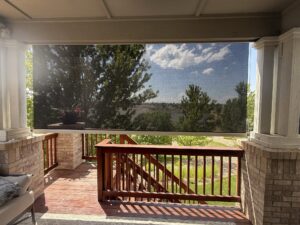
When you use high-performance materials like SunTex fabrics, you aren’t just shading a deck; you are cooling the air that sits directly against your home’s exterior walls. This prevents the “thermal bridging” that often happens through sliding glass doors. Many homeowners find that enclosing a patio with solar shades creates a cool pocket of air that keeps the adjacent indoor kitchen or family room noticeably more comfortable.
The Fabric Factor: Openness and UV Protection
Not all shades are created equal. When selecting an exterior solution, you have to balance Openness Factor with UV Blockage.
- 1% to 3% Openness: Best for maximum cooling and privacy. It blocks nearly all heat but limits the view.
- 5% to 10% Openness: The “sweet spot” for most Colorado homes. It provides significant cooling while allowing you to maintain your mountain views.
Beyond temperature, these shades serve as a protective shield for your interior. We’ve discussed previously how vital it is to protect your home from UV damage, as the thin Colorado atmosphere can bleach hardwood floors and artwork in a single season.
Maximum Versatility: The Retractable Advantage
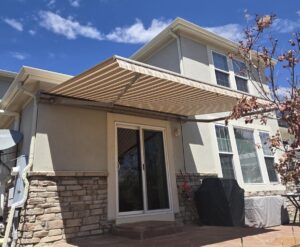
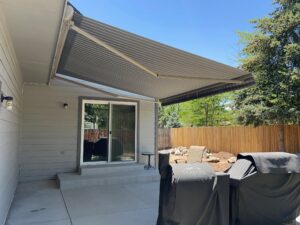
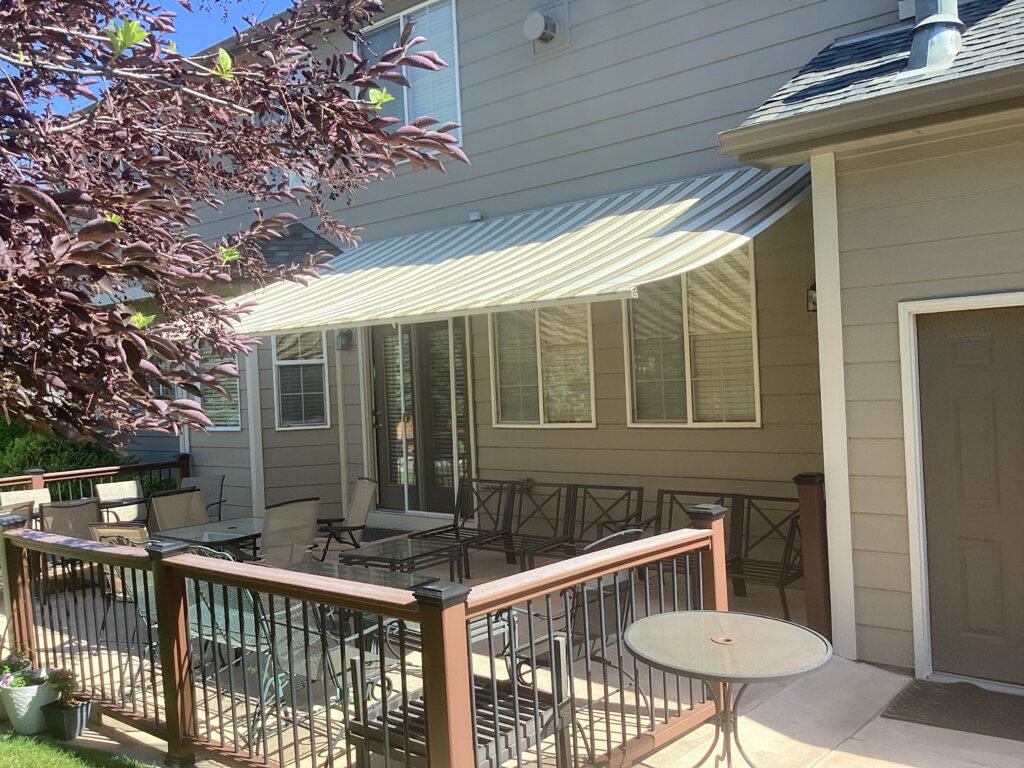
While permanent shading is effective, retractable awnings offer the best of both worlds. During a blistering July afternoon, you can deploy your awning to shade your patio and your home’s foundation. On a chilly October day, you can retract it to allow the “passive solar” heat to naturally warm your home.
This flexibility is why so many homeowners consider them one of the top upgrades for Denver homes. Whether it is a motorized awning or a vertical solar shade, the ability to control your home’s exposure to the sun is the ultimate luxury.
Take Control of Your Climate
Stop fighting the summer heat from the inside out. By moving your cooling strategy to the exterior of your home, you create a more comfortable, energy-efficient, and protected living environment.
Ready to see how much cooler your home can be? Schedule a free estimate with our expert team today and start your patio transformation.