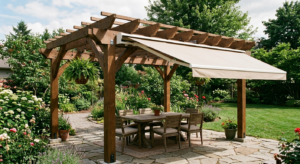

Investing in a high-quality awning is an excellent way to transform your backyard or patio, but getting the maximum value out of your investment requires understanding the movement of the sun across your property. Because the angle and intensity of sunlight change continuously throughout the day, the ideal schedule for extending and retracting your chosen shade system depends entirely on the direction your deck or patio faces.
Proper timing ensures that you block harsh glare and heat before it enters your home, allowing you to maximize your comfort and keep your cooling costs low. More importantly, extending your shade at the right time prevents the sun from baking your concrete patio slab, wood deck, or brick exterior. Once these heavy building materials absorb direct sunlight for a few hours, they act like a radiator—storing that thermal energy and continuing to heat your outdoor space from below long after the sun moves away.
By establishing a daily routine tailored to your home’s unique orientation, you can seamlessly protect the comfort of your indoor and outdoor living space throughout the year.
Managing Morning Sun on East Facing Patios
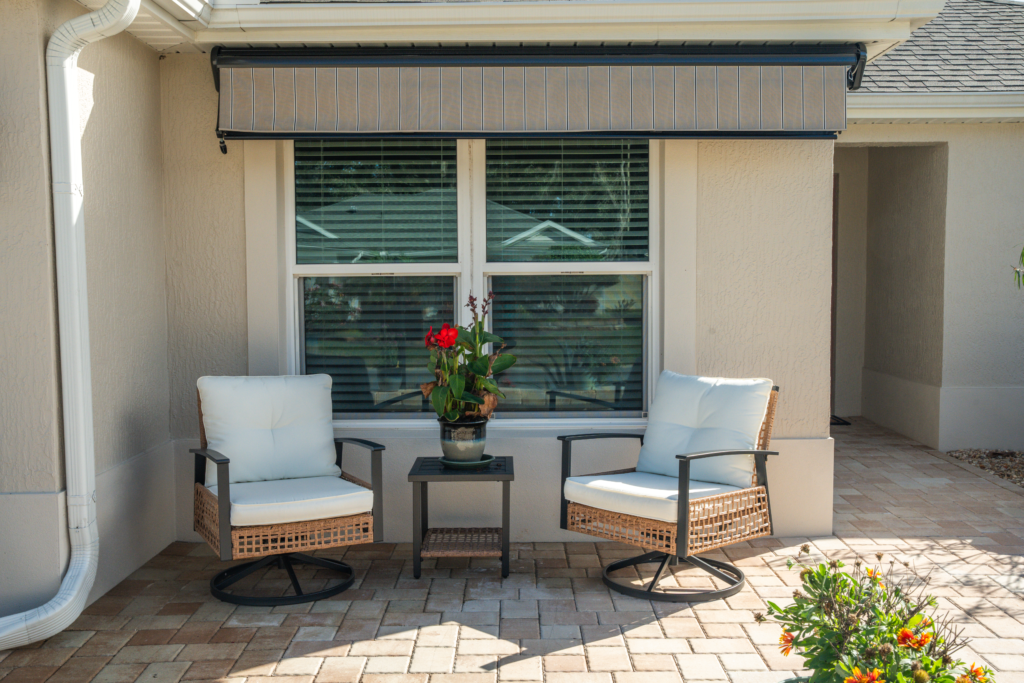
An east-facing patio receives direct, intense sunlight first thing in the morning. As the sun rises, it sits low on the horizon, pouring bright light and heat directly onto your outdoor areas and through your windows. If you want to enjoy breakfast outdoors or prevent your kitchen from heating up early in the day, you should extend your awning as soon as you wake up.
By early to mid-afternoon, the sun moves over the top of your roof line, and the physical structure of your house begins to cast a natural shadow over your backyard. For an east-facing home, the peak heat of the afternoon and evening is naturally blocked by your own roof. This means you can retract your retractable awnings after lunch, letting the natural afternoon shade cool your patio space for the rest of the day.
Blocking Afternoon Heat on West Facing Patios
West-facing patios present the most significant shading challenge for homeowners. During the morning hours, a west-facing backyard sits in the shadow of the house, remaining naturally cool and comfortable. However, starting around midday, the sun moves directly into your outdoor living space, bringing intense heat that peaks during the late afternoon and early evening.
To manage a west-facing patio effectively, you should extend your awning right at midday before the concrete slab and your sliding glass doors absorb too much thermal energy. If you wait until the patio is already scorching, your air conditioner will struggle to cool down the house. Because the sun drops lower in the western sky later in the day, combining your overhead awning with vertical solar shades is highly recommended to block the blinding horizontal glare that cuts underneath the awning fabric during the dinner hour.
All Day Sun Protection for South Facing Patios
South-facing patios receive continuous, direct solar exposure for the vast majority of the day. Because the sun tracks across the southern sky from morning until night, there is very little relief from natural architectural shadows. This constant exposure means your patio and home interior are subjected to steady UV rays and non-stop heat accumulation.
For a south-facing orientation, extending your awning from mid-morning through the late afternoon will give you the best results for heat control. Keeping the system open during these peak hours is highly effective for protecting your outdoor furniture from sun damage and slowing down continuous heat accumulation through your windows. Because a south-facing system handles the most consistent sun exposure throughout the day, choosing heavy-duty, weather-resistant metals and premium fabrics ensures your awning is built to handle that level of daily use whenever you choose to deploy it. For more details on choosing durable materials for high-exposure areas, read our guide on custom options for retractable awnings.
Shading and Privacy for North Facing Patios
Homeowners often assume that a north-facing patio doesn’t need extra shade because it rarely faces the direct path of the sun. While it is true that solar heat gain is less of a concern on the north side of a house, these areas still experience unique sun angles during the peak of summer. In June and July, the sun rises and sets at wider angles, meaning direct, low-horizon sunlight can flood a north-facing patio in the early morning and late evening.
Furthermore, a north-facing awning provides excellent overhead protection during midday when the sun is at its highest point in the sky. Beyond basic sun protection, installing a retractable awning or vertical screen system on a north-facing deck serves as an exceptional tool for blocking persistent winter winds or creating a private, enclosed outdoor environment. To understand how vertical shades can further enhance these cooler areas, explore our analysis on why solar shades work year-round.
Maximizing Your Awning Investment with Proper Use
Paying attention to the daily movement of the sun across your home allows you to use your retractable shade system like a tool for home efficiency. Rather than dealing with a permanent wood or metal patio roof that blocks out valuable natural light during the darker winter months, a retractable system gives you complete control over your home’s exposure.
By opening your system during peak sun hours and keeping it retracted when you want to welcome natural warmth, you can actively reduce your reliance on your air conditioner and furnace. Incorporating these simple habits into your daily routine will keep your living spaces comfortable while keeping your monthly utility bills manageable.
Get Expert Advice on Your Patio Shade Layout
Finding the right balance of shade and placement for your specific deck or patio comes down to seeing how the sun hits your property. With over 15 years of local experience across the Front Range, our team knows how to evaluate a backyard layout and recommend the best setup for your home’s orientation.
Stop guessing about the best spot to add shade. Schedule your free on-site estimate with our team today, or call us at (303) 364-3008 to speak directly with an expert about optimizing your home’s patio shade.